At the JIF Summit 2026 Plenary Discussion, leaders from government, finance, and the investment sector explored how Jakarta can advance today while securing sustainable growth for tomorrow.
The session featured:
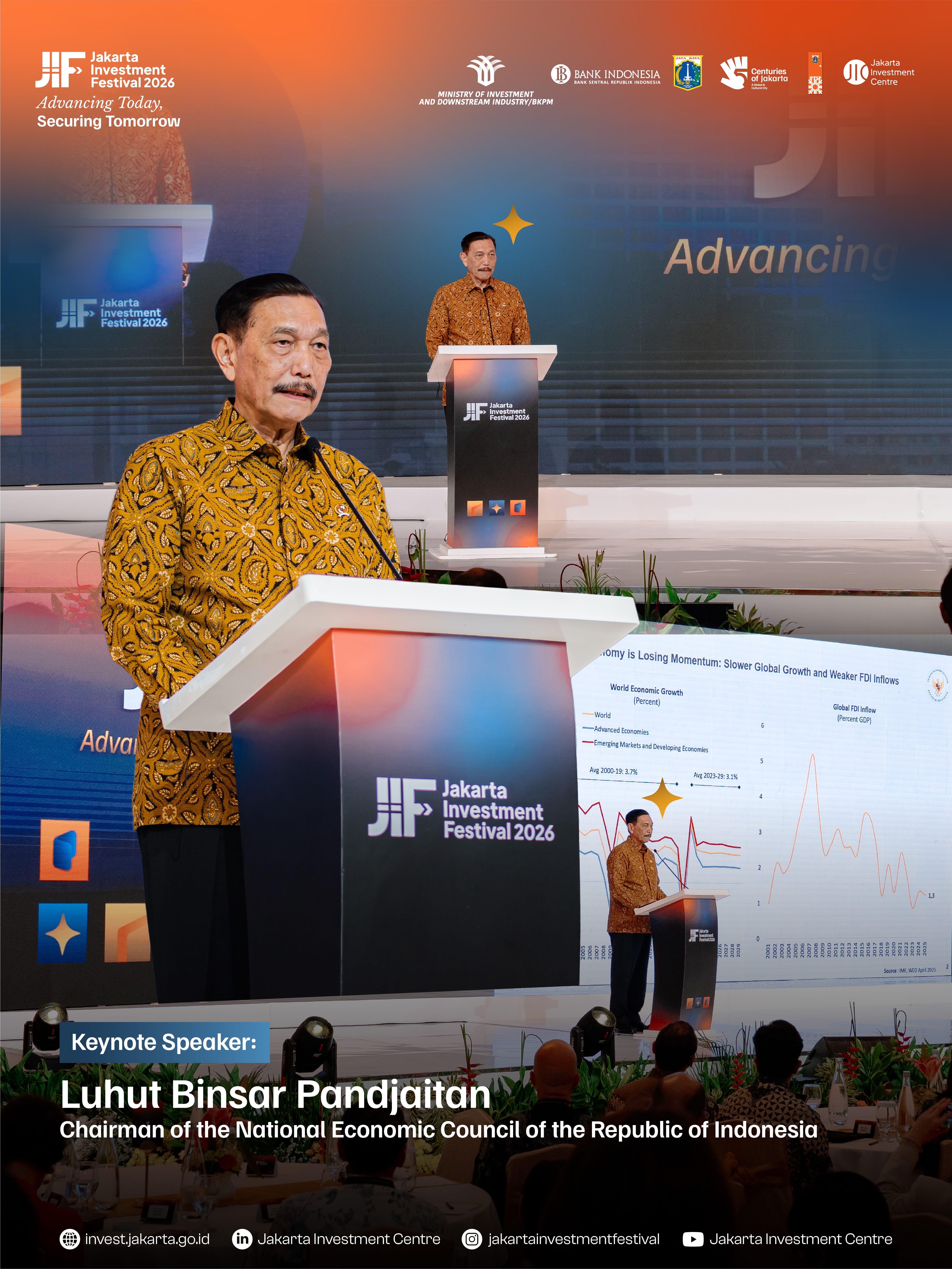
- Mr. Luhut Binsar Pandjaitan, Chairman of the National Economic Council of the Republic of Indonesia, who highlighted the evolving investment landscape, and showed a GovTech demonstration how technology can support targeted social assistance.
- Mr. Rachmat Kaimuddin, Managing Director of Development Investment, PT Danantara Development Management Fund, who discussed Jakarta’s role as Indonesia’s “window to the world,” as well as infrastructure and project preparation.
- Mr. Yustinus Prastowo, Deputy Coordinator of the Advisors to the Governor of Jakarta, who addressed the importance of transforming Jakarta’s assets into greater economic and public value.
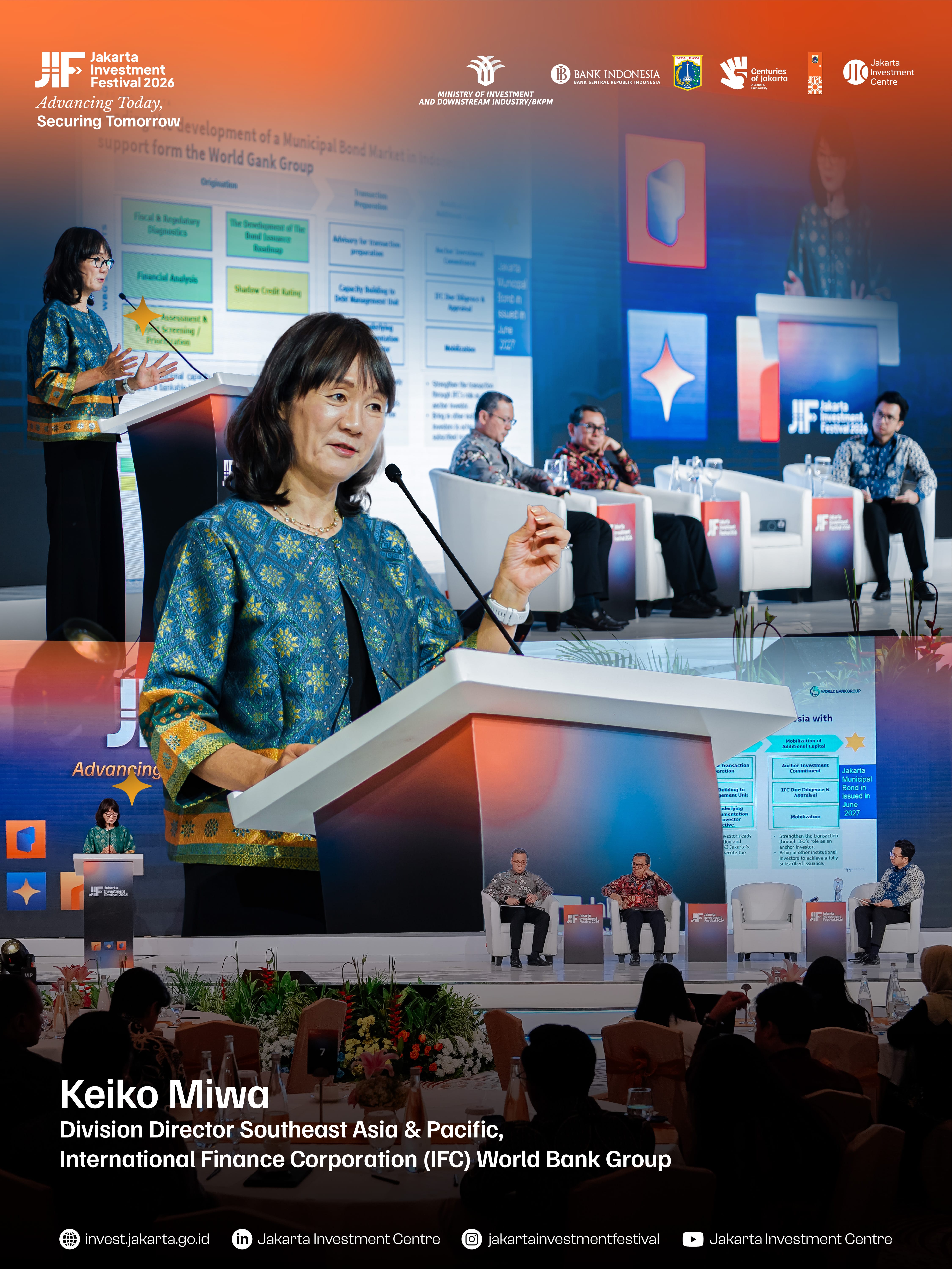
- Mrs. Keiko Miwa, Division Director Southeast Asia and Pacific, International Finance Corporation, World Bank Group, who shared an international perspective on bankable, resilient projects and sustainable investment.
Together, they discussed investor confidence, strategic infrastructure, digital transformation, innovative financing, and the partnerships needed to strengthen Jakarta’s position as a global investment destination.
In his keynote address, Mr. Luhut Binsar Pandjaitan highlighted the importance of strengthening Indonesia’s competitiveness amid global uncertainty.
Geopolitical shifts, economic fragmentation, artificial intelligence, climate change, and changing investor expectations are reshaping the global investment landscape. In response, regulatory reform and digital transformation are essential to building government services that are faster, more transparent, and more predictable.
Mr. Luhut’s keynote also featured a GovTech demonstration, including the use of artificial intelligence to analyse extensive documents, integrated real-time data dashboards, and digital systems to improve the targeting of social assistance.
These innovations demonstrate how technology can support more efficient, transparent, and responsive public services, while strengthening investor confidence in Indonesia and Jakarta.
Mr. Rachmat Kaimuddin emphasised Jakarta’s role as Indonesia’s “window to the world.”
For Jakarta to remain competitive, investment must be supported by high-quality infrastructure, reliable public transport, clean water, a healthy environment, education, healthcare, and globally competitive talent.
Mr. Rachmat also highlighted the importance of strong project preparation. Bankable projects require clear objectives, careful risk identification, appropriate risk allocation, and well-defined responsibilities among all partners.
Through collaboration between Danantara, the Jakarta Government, the private sector, and development institutions, strategic projects can generate meaningful economic and public value.
Keiko Miwa highlighted that global uncertainty can also create opportunities for Jakarta.
As investors increasingly seek projects that are bankable, resilient, and capable of delivering long-term benefits, Jakarta has the opportunity to strengthen its investment appeal through well-prepared and sustainable projects.
Drawing on IFC’s experience in municipal bonds, blended finance, green bonds, sustainability-linked finance, and public-private partnerships, Ms. Miwa highlighted the importance of strong preparation and appropriate financing structures.
IFC and the World Bank are supporting Jakarta through assessments of fiscal capacity, project identification, shadow ratings, issuance planning, and financing structures. This collaboration supports Jakarta’s ambition to become the first local government in Indonesia to issue a municipal bond.
Mr. Yustinus Prastowo highlighted that Jakarta’s challenge is not only to manage its assets, but also to transform them into greater economic and public value.
Investment can expand economic opportunities, improve public services, increase productivity, and contribute to a better quality of life for the people of Jakarta.
To support this transformation, Jakarta is strengthening risk-based licensing, one-stop services through OSS, investment oversight, and the role of government as an investment facilitator.
Jakarta is also developing an ecosystem that integrates public assets, financing, investment, and partnerships. Instruments such as public-private partnerships, municipal bonds, and green bonds can help mobilise private and institutional capital for productive development projects.
The JIF Summit 2026 Plenary Discussion reaffirmed that Jakarta’s future will be shaped through collaboration.
Government institutions, investors, financial institutions, development partners, and the private sector each have an important role in advancing projects that strengthen the city’s economy and improve the quality of life for its people.
From digital transformation and public infrastructure to project preparation and innovative financing, the discussion underscored one shared priority: creating sustainable value for Jakarta today and securing its future tomorrow.